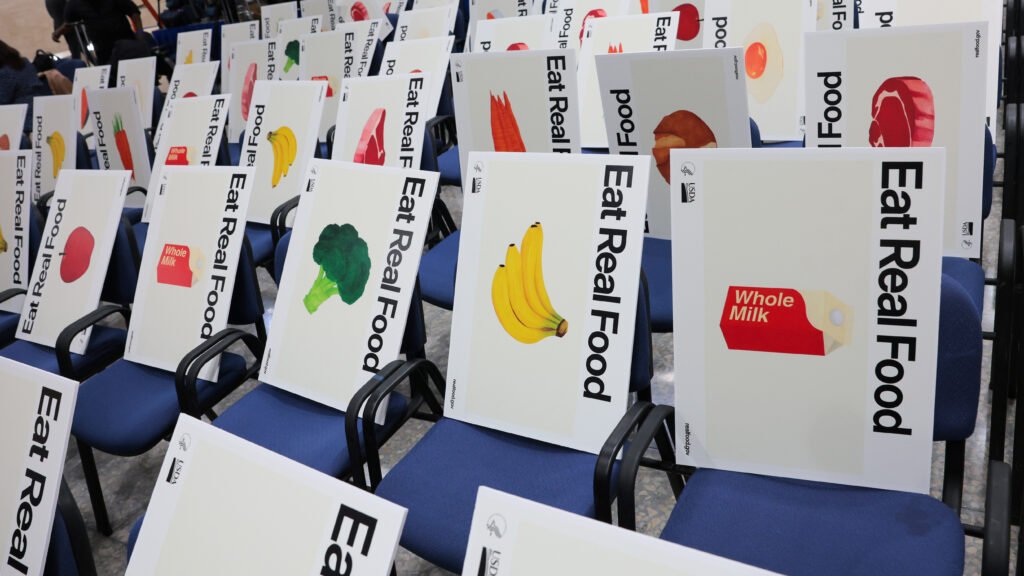
How trustworthy is the new U.S. food pyramid? It’s a mixed bag, according to the government website devoted to that pyramid.
Kyle Diamantas, head of the Human Foods Program at the Food and Drug Administration, alerted the public this week to a generative artificial intelligence tool added to the government’s “transformational” realfood.gov site. The tool, with a headline “Use AI to get real answers about real food,” features “AI integration to provide parents and consumers with clear and concise answers at the click of a button,” Diamantas wrote on X.
It turns out that the click of a button leads users to Grok — the generative chatbot that’s part of the X social media platform owned by former Trump administration adviser Elon Musk. Asked if the new food pyramid is backed by high-quality research, Grok responds: “Many nutrition scientists and organizations have raised concerns about the evidence quality and process for the final version.” While the guidelines’ recommendations on limiting added sugars and ultra-processed foods are backed by research, Grok says, “the emphasis on saturated fats and animal proteins contradicts longstanding evidence.”
That’s a pretty accurate summary of the nutrition community’s response to the new guidelines and pyramid, which features a prominent rib-eye steak and stick of butter along with less controversial items like broccoli, salmon, and olive oil. But in general, researchers are wary of the risks of turning to AI for nutrition advice.
“I think the use of AI holds promise for providing tailored nutrition advice in a way that is convenient and low-cost,” said Alyssa Moran, a nutrition policy researcher and epidemiologist at the University of Pennsylvania. But she notes that generative AI, just like human health care providers, tends to perpetuate stereotypes about eating and weight, such as stigmatizing obesity. Overall, she said, the models need a lot more testing on how they answer nutrition questions before they’re ready for widespread public use — “[a]nd certainly before these tools are promoted by the government, which is supposed to be looking out for the public’s health.”