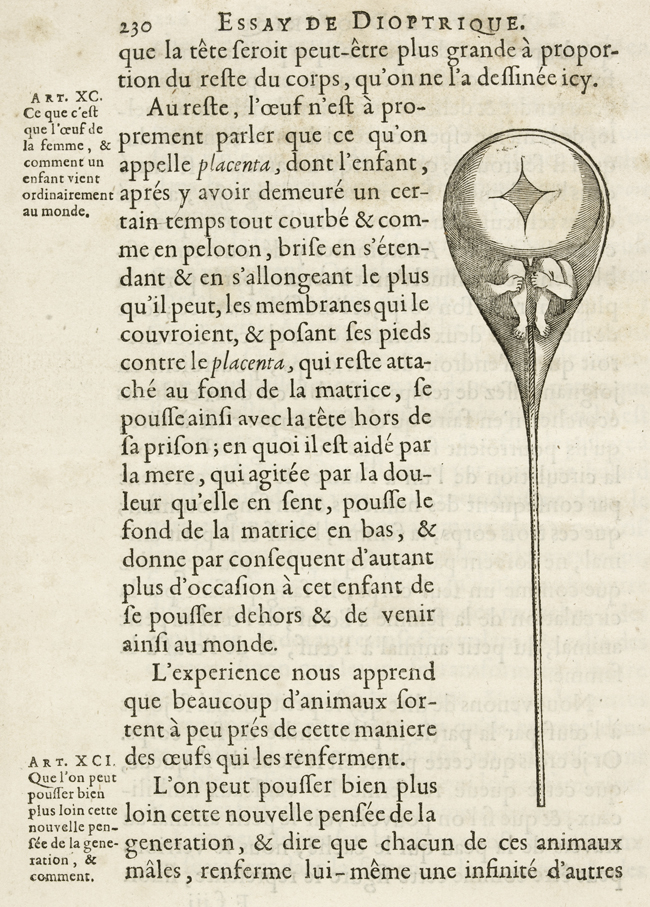
In his 1694 review of magnifying lens technology, “Essai de Dioptrique,” Dutch naturalist Nicolas Hartsoeker included a drawing destined to make a lasting impression on future students of human reproduction. Inside a drop-like form with a long, straight tail is the lower part of a human body, crouched and holding its knees below a large sphere with an open perforation at the top. It’s the most accurate depiction of what sperm was believed to be at the time: containing a full, minuscule human, ready to be implanted and grow in the womb.
It would take more than a century for sperm to get its name — spermatozoa, from the Ancient Greek for “seeds of living beings” — and even longer until its physiology was understood.