CLEVELAND — Amy Acton couldn’t speak.
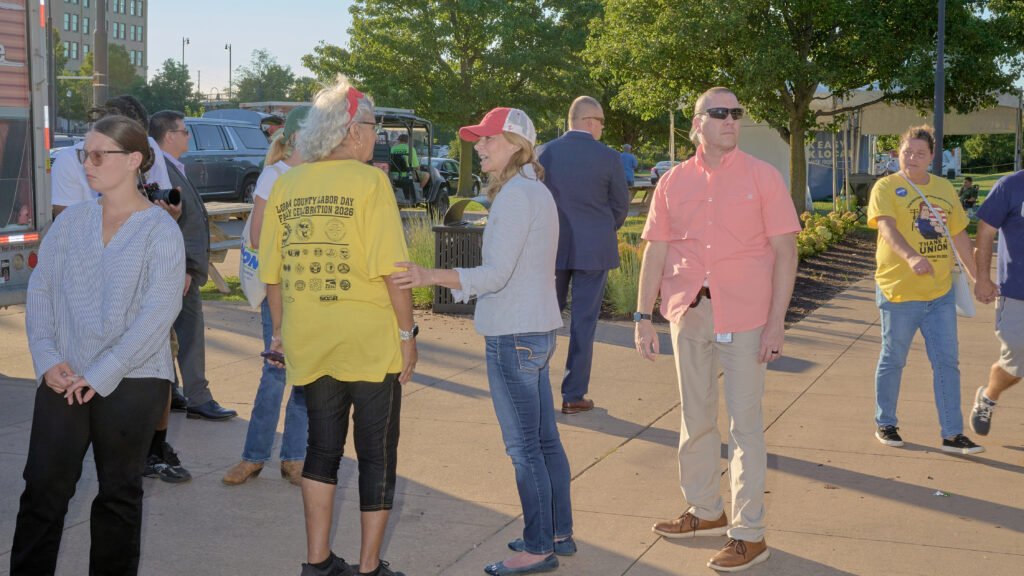
Supporters of Acton, the Democratic nominee for governor of Ohio, were waiting for her remarks along the banks of the Black River, once known as the “river of fish tumors” because of the catfish deformed by steel mill slag. Now the river was being rehabilitated. Acton, a physician who vaulted to national fame when she led Ohio’s aggressive response to Covid-19 as the state’s director of public health back in 2020, was running with the promise to do the same for state politics.
The crowd, attending a Labor Day festival in the industrial city of Lorain, had spent the afternoon grazing on boba tea and pastelitos from food trucks while a live band covered ’90s hits like “Return of the Mack.” They didn’t yet know that Acton wasn’t going to make it onstage after all. Earlier that day, at a different campaign event about 90 miles east in Canfield, a man carrying two handguns, brass knuckles, and a Taser had barreled toward Acton while yelling her name, knocking over an elderly couple in the crowd. (The man, Patrick Havas, has since pleaded not guilty to charges including assault.)
Of all the high-profile electoral contests this November, the heated race for Ohio governor could be the most direct test of where public opinion in the heartland currently stands on health care, trust in science, and the lasting legacy of the Covid pandemic. Acton’s Republican opponent, Vivek Ramaswamy, is the billionaire founder and former CEO of biotech company Roivant who built his political profile as a 2024 presidential candidate in part on accusing the government of overreach in the pandemic — claims he’s made central to his current gubernatorial campaign as well.
STAT visited events for each candidate on the same day in August to get a sense of how Acton and Ramaswamy are tapping into American health anxieties, and how their messages are resonating with Ohioans. Acton stands by her decisions during the pandemic, but is betting that people in Ohio are ready to move on and instead focus on fixing problems like health care affordability and access. (Affordable Care Act enrollment in Ohio dropped by one-third in the past year following the expiration of federal subsidies, the most of any state.)